Case study · 2026 · Present
Continuum
Bridging the gap between therapy sessions through calm, AI-assisted patient care.
Role
Lead Product Designer (End-to-End)
Timeline
2026 · Present
Scope
AI Integration, Design System, Information Architecture
Context
Side Project / Independent Build
01
Overview
From a patient problem to a connected therapy product
Continuum started from a patient problem: forgetting important things that happened between therapy sessions.
Research then showed that continuity was also a problem for therapists, who manage multiple patients, different tools, session context, scheduling, resources and administrative work.
The product evolved from a patient focused idea into a connected therapist and patient experience designed to make therapy more continuous.
- Initial assumption
- Patients need a better way to capture what happens between sessions.
- What changed
- Research showed that continuity was also a problem for therapists.
- Product direction
- Create a connected experience that supports the therapeutic process before, during and between sessions.
02
Research
Listening before designing anything
I wanted to understand what happens before, during and between therapy sessions, from both the therapist and the patient perspective.
35+
conversations
10
psychologists
5
coaches
20
people with therapy experience
- Research goal
- Understand what happens before, during and between therapy sessions, from both the therapist and patient perspective.
- Research methods
- Conversations and interviews with practising therapists, coaches and people with therapy experience.
- Participant groups
- 10 psychologists, 5 coaches and 20 people with therapy experience.
- Research limitations
- To be added
- Validation status
- Research completed. MVP built. Formal usability testing still needed.
Key questions
- How do therapists prepare for and follow up after sessions?
- How do they remember patient context and evolution?
- What happens between sessions?
- Which parts of the workflow take the most time?
- What information do they need to have at hand?
- How do patients remember things they want to discuss in therapy?
03
Direction
How the problem changed
01
Initial assumption
Help patients capture what happens between sessions.
02
What I learned
Therapists were also dealing with fragmented tools, patient context, scheduling, resources and administrative work.
03
Product shift
The focus moved towards the therapist workflow while keeping the patient experience connected.
04
Insights
What the conversations surfaced
Patients can forget important things they wanted to bring to therapy.
Evidence
Reported in conversations with people with therapy experience.
Product implication
Give patients a way to capture a moment when it happens.
Therapists use different tools and methods to manage information about the same patient.
Evidence
Reported across therapist and coach conversations.
Product implication
Explore one workspace that keeps patient context together.
Some therapists were already using AI for different tasks.
Evidence
Reported in therapist conversations.
Product implication
Design AI as reviewable assistance inside the existing workflow.
Therapists need to manage scheduling and calendars.
Evidence
Reported in therapist conversations.
Product implication
Bring agenda and calendar into the therapist workspace.
Therapists spend time finding or creating personalised resources.
Evidence
Reported in therapist conversations.
Product implication
Use AI to draft personalised resources the therapist approves.
05
Product decisions
From insight to decision
What I learned
Therapists use multiple tools around the same patient.
Decision
Explore an integrated therapist workspace.
Why
Reduce fragmentation and keep relevant patient context in one place.
What I learned
Therapists need to quickly refresh their memory before sessions.
Decision
Bring previous session summaries and patient context together.
Why
Make relevant history easier to access before and during the session.
What I learned
Therapists spend time creating or finding personalised resources.
Decision
Use AI to help generate personalised resources based on session context.
Why
Reduce repetitive work while keeping the therapist responsible for what is shared.
What I learned
Scheduling and calendar management can be fragmented.
Decision
Explore Google Calendar and Apple Calendar synchronisation.
Why
Make scheduling easier to view and manage from the therapist workspace.
06
MVP scope
What made it into the product
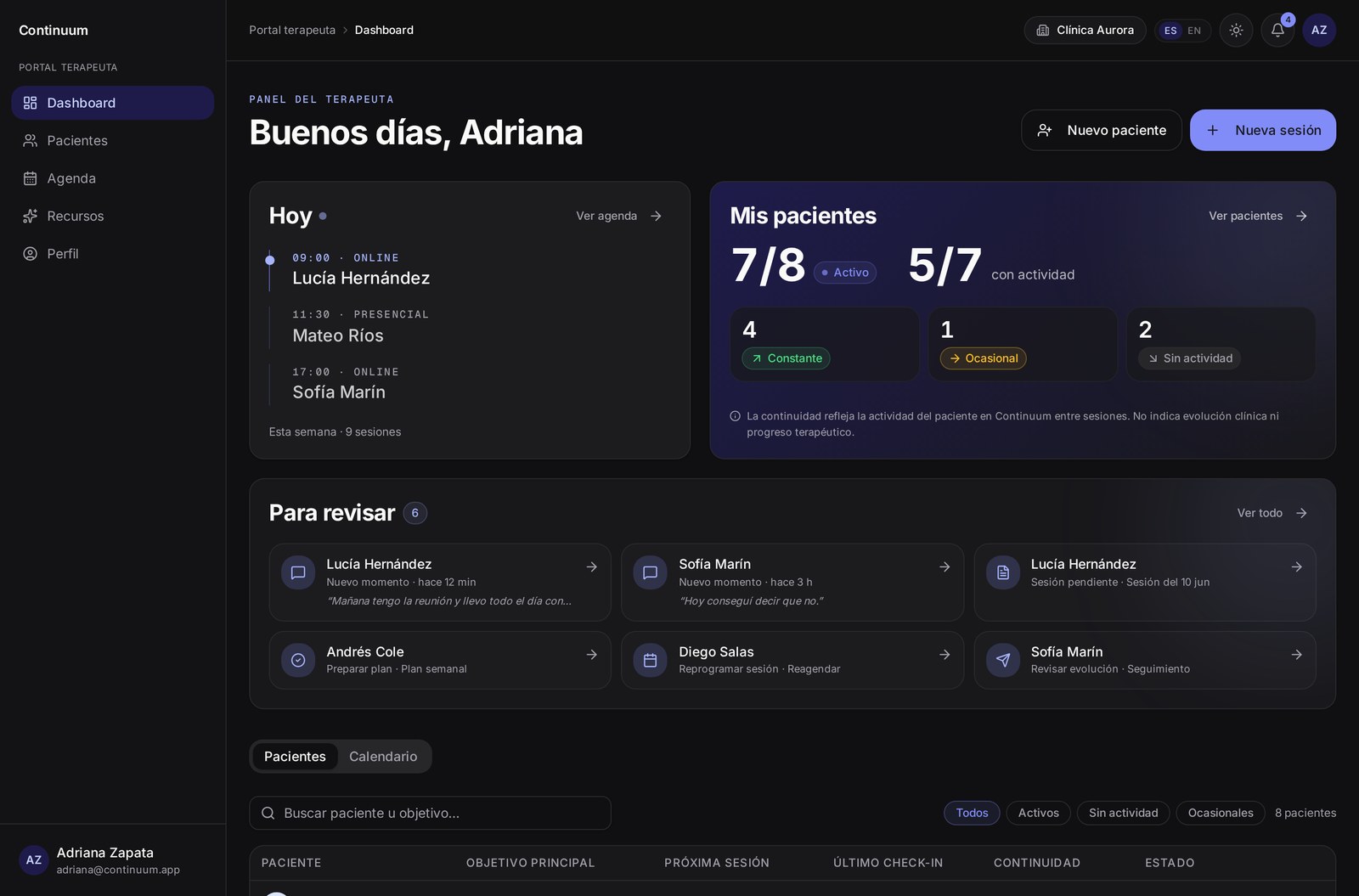
Therapist
- Dashboardfunctional
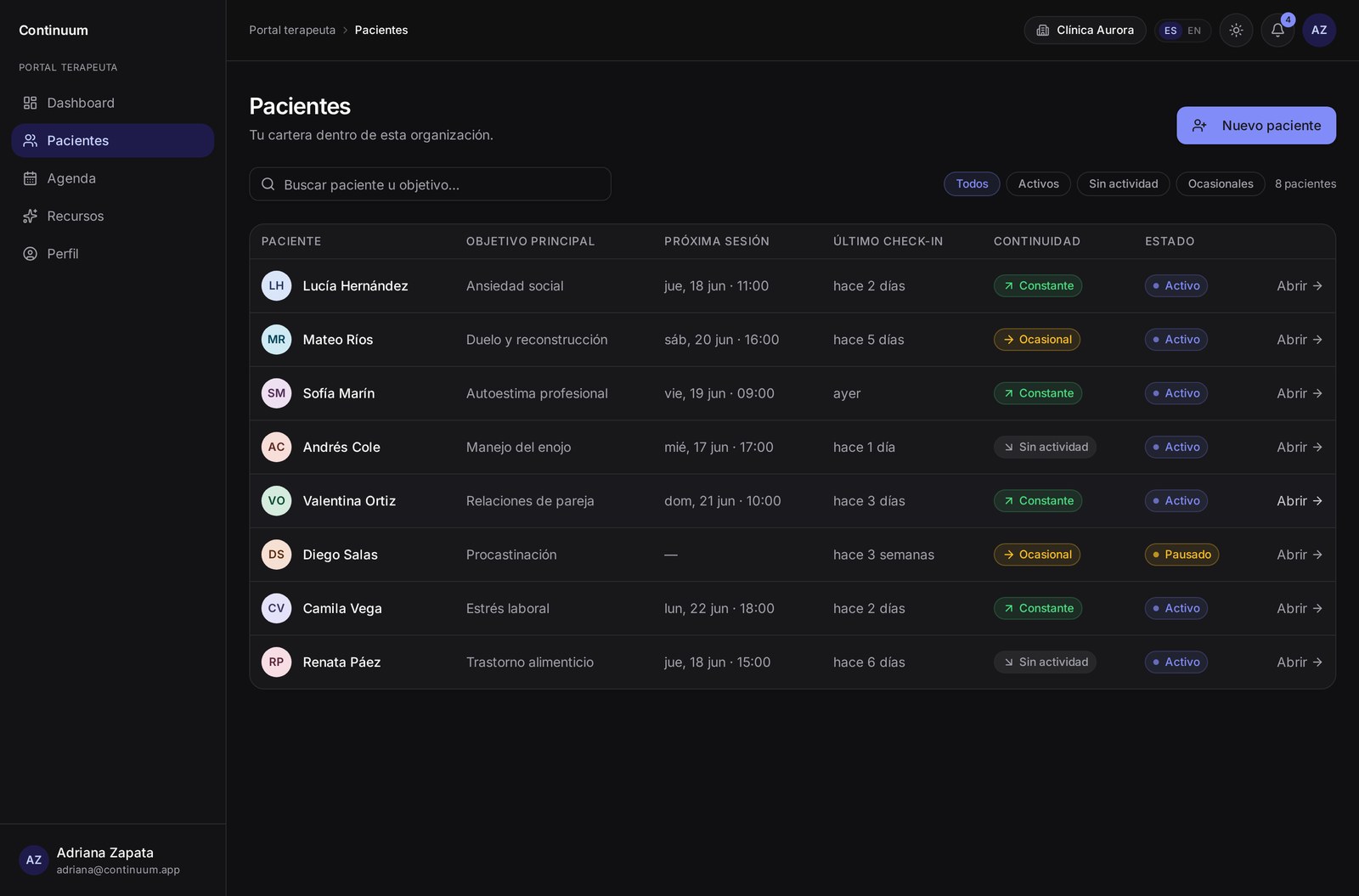
- Patientsfunctional
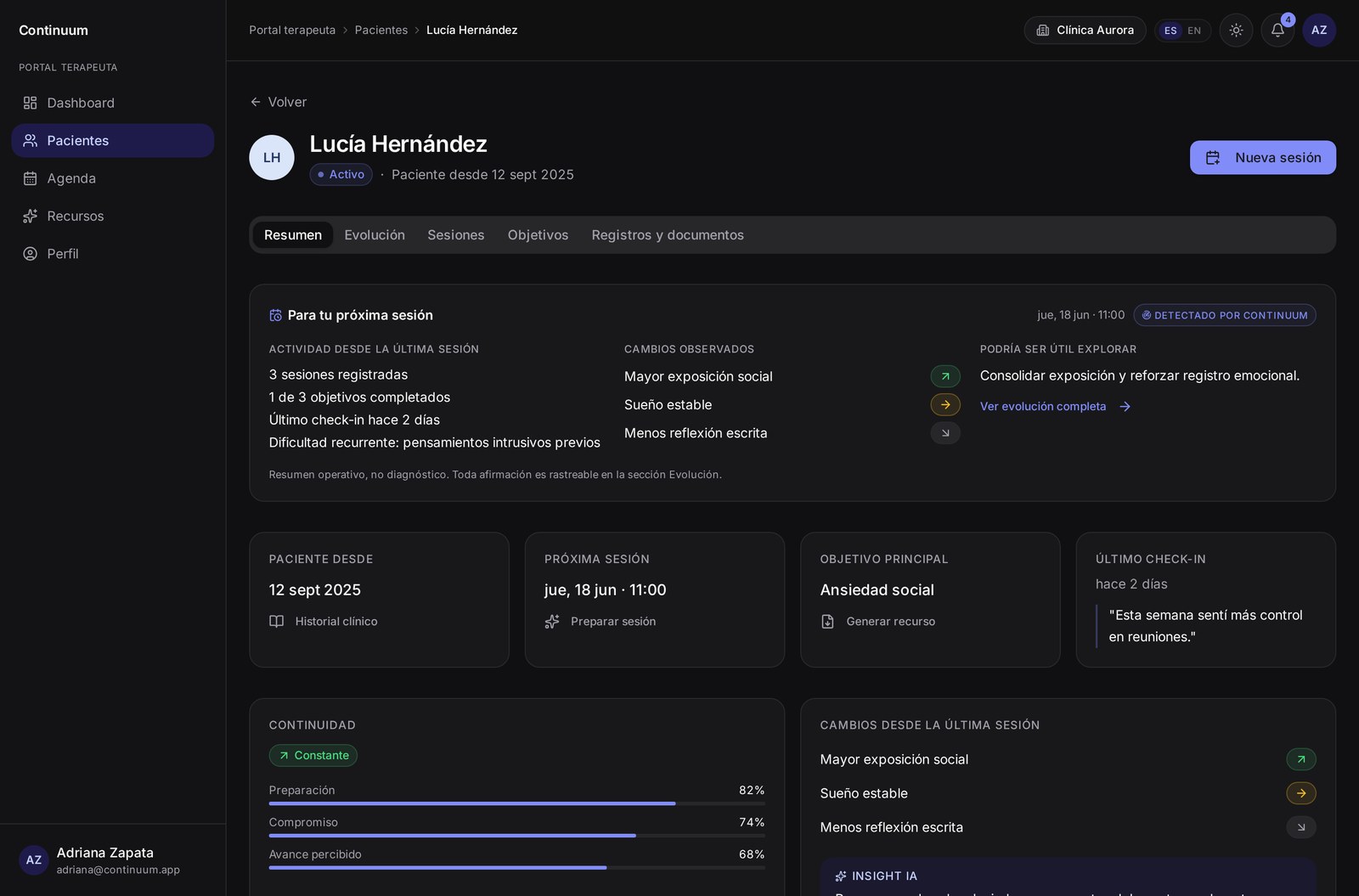
- Patient contextprototyped
- Sessionsfunctional
- Session summariesprototyped
- Agenda / calendardesigned
- Resourcesprototyped
- AI assistanceprototyped
Patient
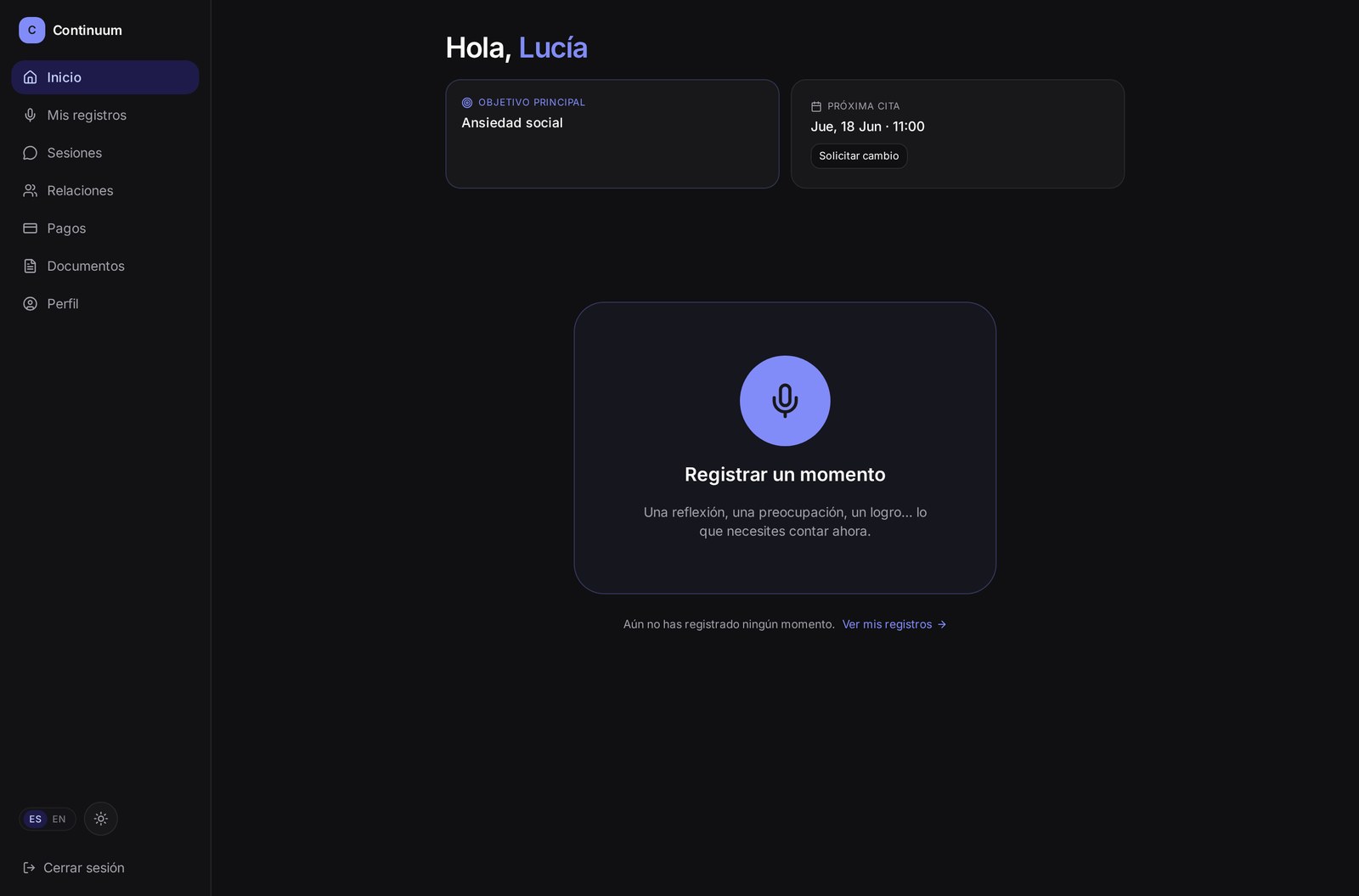
- Homefunctional
- Register a momentprototyped
- Progress / historyprototyped
- Goalsdesigned
- Therapist approved resourcesdesigned
- Session related informationdesigned
AI
- Transcriptionprototyped
- Session summariesprototyped
- Insights / patternsconcept
- Suggested actionsconcept
- Personalised resourcesprototyped
- Audio generationconcept
07
Validation
What still needs to be validated
The MVP has not yet been formally tested with the people I interviewed. The next step is to test the core workflow with therapists and patients before expanding the product further.
Validation questions
- Can therapists understand the value of the integrated workflow?
- Can they review and edit AI generated content comfortably?
- Does the patient experience make it easier to capture useful moments between sessions?
- Does the information captured between sessions improve continuity in the next session?
- Which parts of the broader workspace are actually necessary?
08
AI integration
Where AI helps, and where it stops
AI can help with
- Transcription
- Summarisation
- Surfacing patterns
- Suggested actions
- Personalised resources
- Audio generation
Therapist decides
- Review
- Edit
- Approve
- Share with patient
AI does not act autonomously
- Nothing is sent to the patient without therapist approval.
- AI should not replace therapist judgement.
- AI outputs should remain reviewable and editable.
09
AI workflow
AI as a layer inside the loop
- Session
- AI processing
- Summary / insights / suggestions
- Therapist review
- Edit / approve
- Patient
- Between session input
- Next session
10
Patient experience
Register a moment
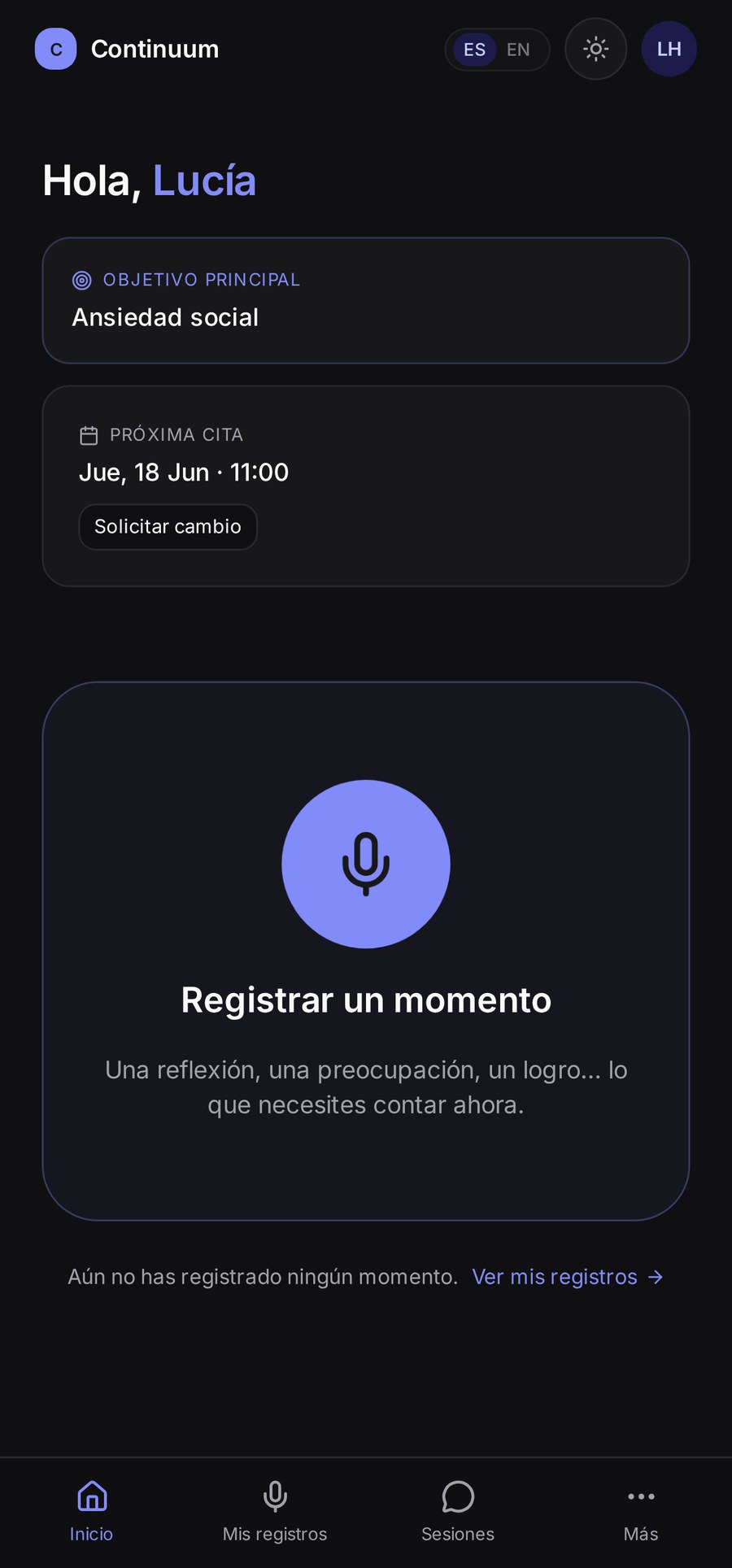
- Problem
- Patients may experience something important between sessions but forget it by the time the next session arrives.
- Design response
- Give patients a simple way to capture a moment while it is happening, using voice or text.
- Product value
- Those moments can become useful context for the next therapy session.
- User quote
- To be added
11
Design decisions
Information hierarchy
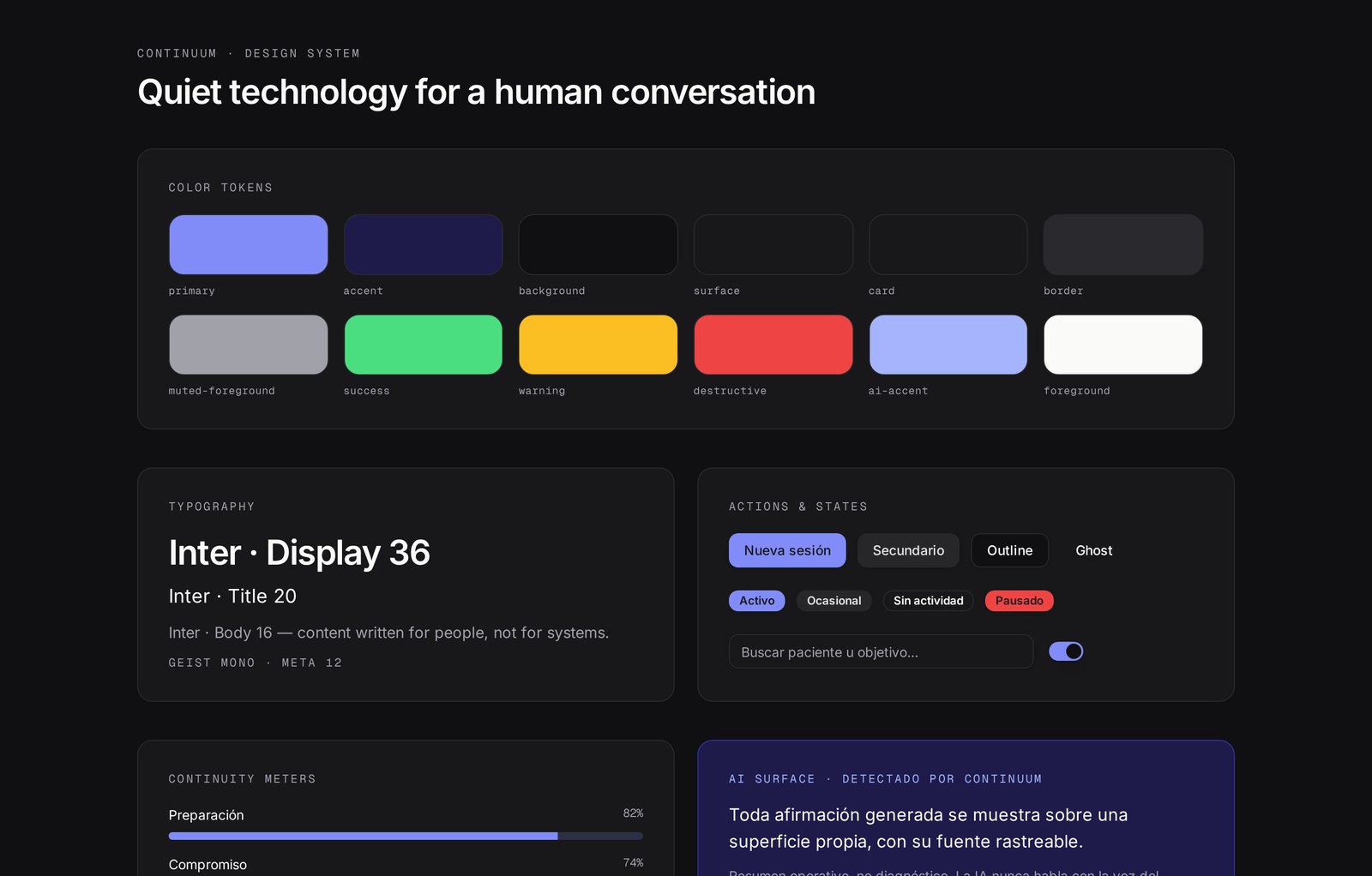
The therapist needs to understand their work at a glance, while still being able to access deeper patient context when needed.
01
Home
- High level overview of the day and the caseload
02
Patient
- Sessions first
- Relevant context
- Documentation
03
Session
- Current session
- Previous context
- AI assistance
- Actions / follow up
12
My role
End to end product design and strategy
End to end product design and strategy, from research and product definition to UX, AI workflows and MVP build.
Responsibilities
- User research
- Problem definition
- Product strategy
- MVP definition
- Therapist and patient journeys
- Information architecture
- UX flows
- UI design
- AI interaction design
- Prototyping
- MVP build
13
Outcome
Where Continuum stands today
Continuum is currently at the MVP and prototype stage. The product work helped turn the initial patient problem into a broader product concept connecting therapist workflows with patient continuity.
- Current product status
- MVP / prototype.
- What has been built
- A therapist workspace and a connected patient experience, with AI assistance built into the session flow.
- What has been validated
- The problem space, through 35+ conversations with therapists, coaches and people with therapy experience.
- What remains to validate
- The core workflow with therapists and patients, and the quality of AI outputs in real use.
14
Takeaways
What building Continuum taught me
- Define the core product problem before expanding the feature set.
- Understand both sides of a product relationship.
- Ask users about their actual workflow rather than designing from assumptions.
- Learn where AI is useful and where human review needs to remain central.
- Building with AI makes it easier to explore and prototype, but it does not replace product decisions.
15
Next steps
Validate the core loop before expanding
- Session
- AI summary / insights
- Therapist review
- Personalised support
- Patient between sessions
- Next session
Potential next validation
- Therapist usability testing
- Patient usability testing
- AI output quality testing
- Validation of willingness to use or pay
- Identify which wider therapist features are actually needed